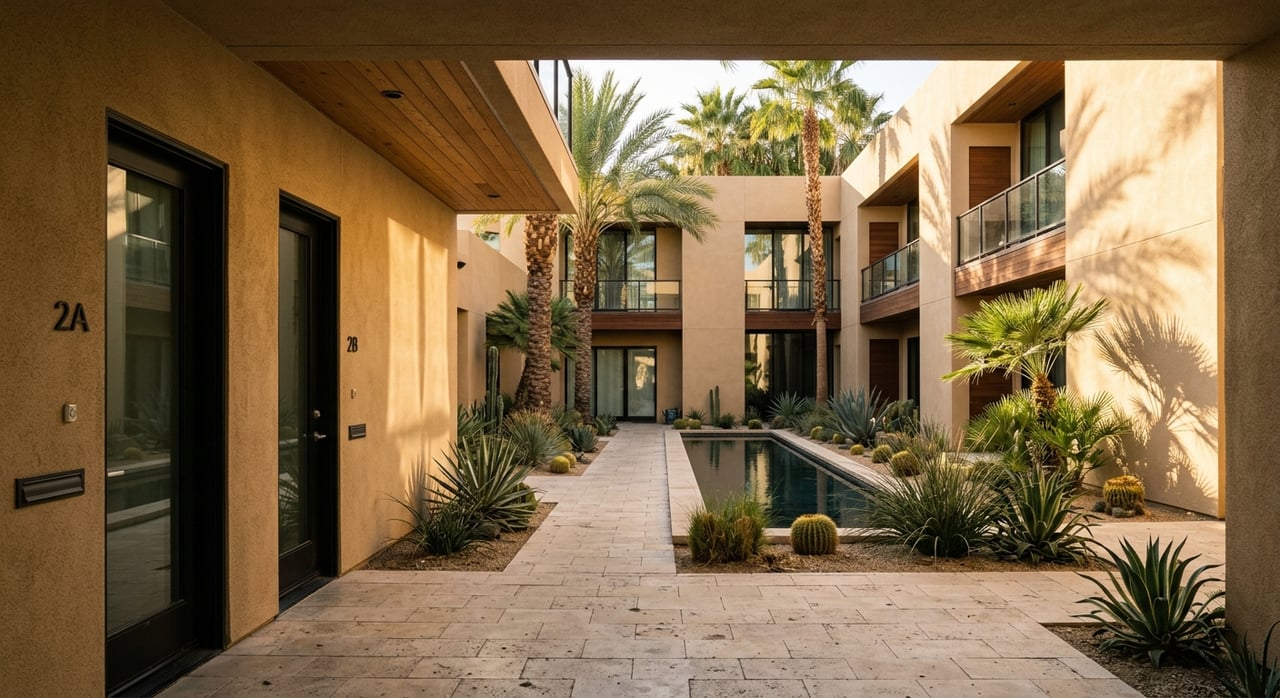
Palm Desert Condo Buying Tips for Second-Home Buyers
May 14, 2026
May 14, 2026
If you are thinking about buying a second home in Palm Desert, a condo can be one of the easiest ways to enjoy the desert without taking on the full workload of a single-family property. You may want a seasonal escape, a lock-and-leave home, or a place that could help offset costs through rentals. The key is knowing that not every condo works the same way, especially when HOA rules, city rental rules, and long-term carrying costs come into play. This guide will help you sort through the most important details before you buy. Let’s dive in.
Palm Desert gives you a wide condo market with options across several price points. Current listings show condos ranging from the high $200,000s into the $1.3 million range, with a median listing price around $499,000. That gives you room to compare entry-level communities, amenity-rich developments, and higher-end golf community properties.
The market also offers variety in setting and style. Popular condo areas listed in Palm Desert include Indian Ridge Country Club, Palm Valley Country Club, South Palm Desert, Laguna De La Paz, and Ironwood Country Club. For many second-home buyers, that means you can focus on the lifestyle you want first, then narrow down the right ownership fit.
Timing matters too. Palm Desert homes generally are not flying off the shelf overnight. Current market data shows condos are staying on the market about 90 days on average and receiving about one offer, which can give you time to compare communities and review documents carefully.
One of the most important things to understand is that a condo is a legal ownership structure, not just a building style. In California, condo ownership usually means you own your unit and also have an interest in shared common areas. Those common areas can include private streets, pools, recreation spaces, trails, and other community features.
That matters because your purchase is tied to the homeowners association. The HOA is not just there to maintain landscaping. It is responsible for budgets, reserves, insurance, common-area maintenance, and enforcing the community’s governing documents.
For a second-home buyer, this can be a major advantage. If your goal is a low-maintenance property, an HOA-managed community may reduce the amount of day-to-day oversight you need. At the same time, it also means your ownership experience depends heavily on how well that HOA is run.
It is easy to focus on the monthly HOA fee and assume lower is better. In reality, a lower fee may mean fewer services or weaker reserve funding. A stronger HOA budget can support maintenance, insurance, utilities, management, and future repairs more effectively.
California requires annual HOA budget materials that can reveal a lot about a community. These materials may include a pro forma budget, reserve summary, reserve funding plan, insurance summary, possible special-assessment disclosures, and FHA or VA status for condo projects. For buyers, that information can help you spot risk before it becomes your problem.
A reserve study is especially important. California requires a visual inspection of major components at least every three years, plus annual board review and an updated reserve funding plan. If reserves are weak, the community may be more likely to rely on special assessments for major repair or replacement costs.
If you live out of area, the HOA disclosure package can save you from expensive surprises. California requires sellers to provide key documents, including the governing documents, current fee information, the most recent annual budget materials, unresolved violation notices, and any rental prohibition in the CC&Rs. If requested, you can also review recent board minutes.
These documents help answer practical questions that matter for second-home ownership. Can you lease the property the way you plan to? Are there renovation restrictions? Has the board been discussing major repairs, insurance changes, or community conflicts?
California also requires an annual policy statement that covers assessment collection, lien enforcement, dispute resolution, discipline, and approval rules for physical changes. That can give you a quick feel for how the community operates and how strict it may be about property use or modifications.
Before you tour communities, decide how you plan to use the property. This step should guide nearly every other part of your search. In Palm Desert, your intended use is one of the biggest filters for choosing the right condo.
If you want a simple desert retreat for part-time living, a lock-and-leave condo may be ideal. In that case, you may care most about HOA-managed maintenance, easy upkeep, and amenities that support your lifestyle while you are in town.
If you plan to rent the property for longer stays, you still need to verify what the HOA allows. California requires disclosure if the CC&Rs prohibit rentals or leasing. That makes it important to confirm the lease policy before you write an offer.
If your goal is short-term rental income, you need to check both city rules and HOA rules. A condo is only a real candidate if the intended lease term is allowed by the city zone and by the community’s governing documents. This is where many buyers can go wrong if they assume every desert condo can be used the same way.
Palm Desert defines a short-term rental as a dwelling rented for 27 consecutive nights or less. The city requires a permit for each property, and the permit fee is $29. The minimum short-term rental stay is three days and two nights.
Zoning is a major factor. The city states that short-term rentals are prohibited in R1 and R2 unless the owner lives on-site. RE and R3 zones are more flexible, while HPR and PR require either an HOA approval letter or on-site ownership.
If the property is in an HOA community, the city requires an annual HOA approval letter when applicable. That means city approval alone is not enough. You need the condo community’s rules to line up with the city’s zoning and permit requirements.
There is also an operational side to consider. Palm Desert requires operators to meet and greet renters on-site, provide the Good Neighbor Brochure, share short-term rental rules, and leave 24-hour availability information. For an out-of-area owner, that can make local support or property management an important part of the budget.
The tax side matters too. The city requires monthly short-term rental tax reporting, even when there is no rental income. For stays of 27 nights or less, the city says the rental is subject to 11% transient occupancy tax plus a 1% Greater Palm Springs TBID assessment.
Your condo budget should go further than the sales price and mortgage payment. In Palm Desert, second-home buyers should also plan for HOA dues, possible special assessments, condo-owner insurance, property taxes, and any local special taxes or direct levies tied to the parcel.
In California, the base property tax rate is 1% plus voter-approved bonded indebtedness. Annual tax bills can also include special assessments, special taxes, direct levies, utility billings, and Mello-Roos bonds. After a change in ownership or new construction, buyers should also plan for a supplemental tax bill.
Do not assume a vacation condo will qualify for the homeowners’ exemption. In California, that exemption applies to a qualifying owner-occupied principal residence and reduces taxable value by $7,000. A true second home usually will not qualify unless it later becomes your primary residence.
Condo insurance is often misunderstood by second-home buyers. The California Department of Insurance says a condo unit-owner policy generally covers your personal property, loss of use, personal liability, and certain interior improvements you are responsible for. The HOA generally insures the building structure and common areas.
That split is why you should review the HOA insurance summary and ask about the master policy deductible. You should also ask whether loss-assessment coverage makes sense for your situation. Earthquake coverage is usually offered separately, so that is another item to discuss as you build your ownership budget.
If you are shopping from outside the Coachella Valley, clarity matters more than speed. A good condo can be a great fit for seasonal use or income goals, but only if the details line up.
Here is a practical checklist to use as you compare Palm Desert condos:
Buying a Palm Desert condo for second-home use is not just about finding a beautiful property. It is about choosing a community and ownership structure that fits how you actually plan to live, visit, or rent. The right guidance can help you compare HOAs, spot red flags in disclosures, and narrow your search to communities that match your goals.
That is especially useful in a market where one condo may work beautifully as a low-maintenance seasonal home, while another may be better for a buyer focused on rental flexibility. A clear process can help you save time, avoid mismatches, and move forward with more confidence.
If you are exploring Palm Desert condos for a second home, Deborah Ferrell can help you evaluate communities, review the practical details, and find a property that fits your plans in the desert.
Stay up to date on the latest real estate trends.
Whether you're buying, selling, or investing in real estate, Terry and Deborah are here to assist you every step of the way. Contact us today to schedule a consultation and experience the difference our team can make for you!