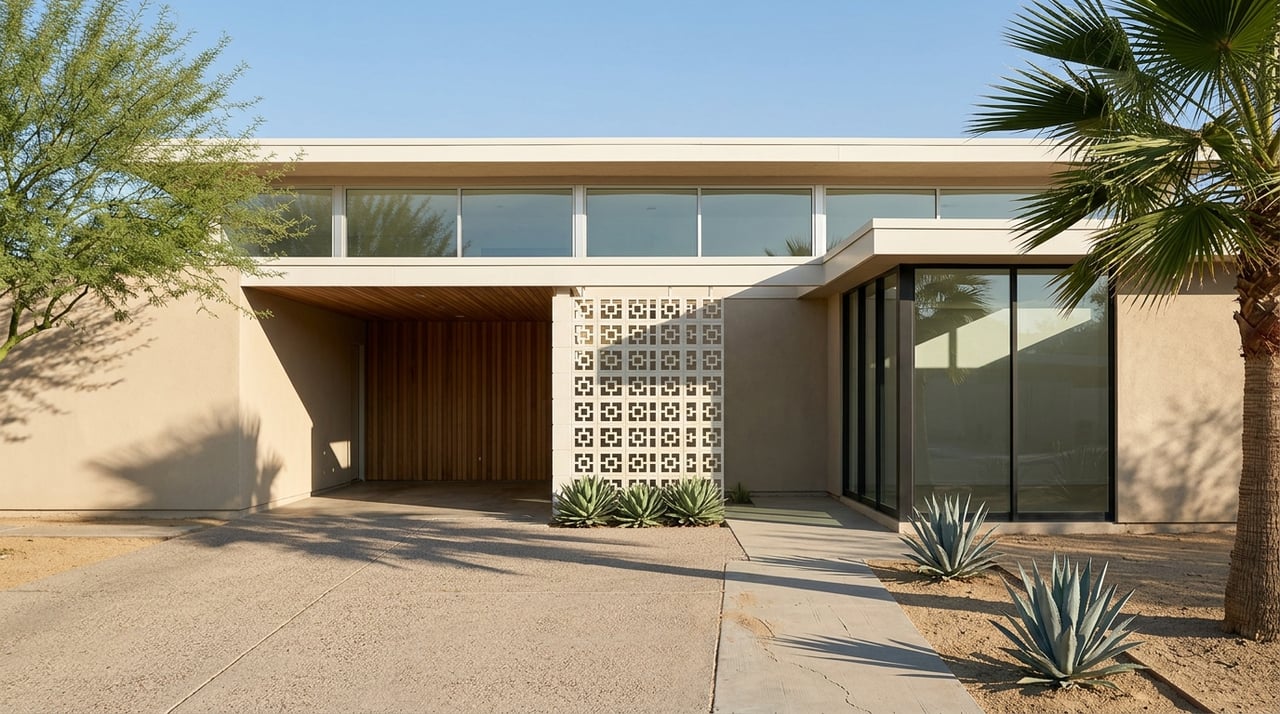
Palm Springs Midcentury Homes Guide for Smart Buyers
July 9, 2026
July 9, 2026
Buying a midcentury modern home in Palm Springs can feel equal parts exciting and overwhelming. You may love the clean lines, walls of glass, and iconic rooflines, but you also need to know what you are really buying beyond the photos. This guide will help you understand what defines a true Palm Springs midcentury home, which neighborhoods deserve a closer look, and what to check before you make an offer. Let’s dive in.
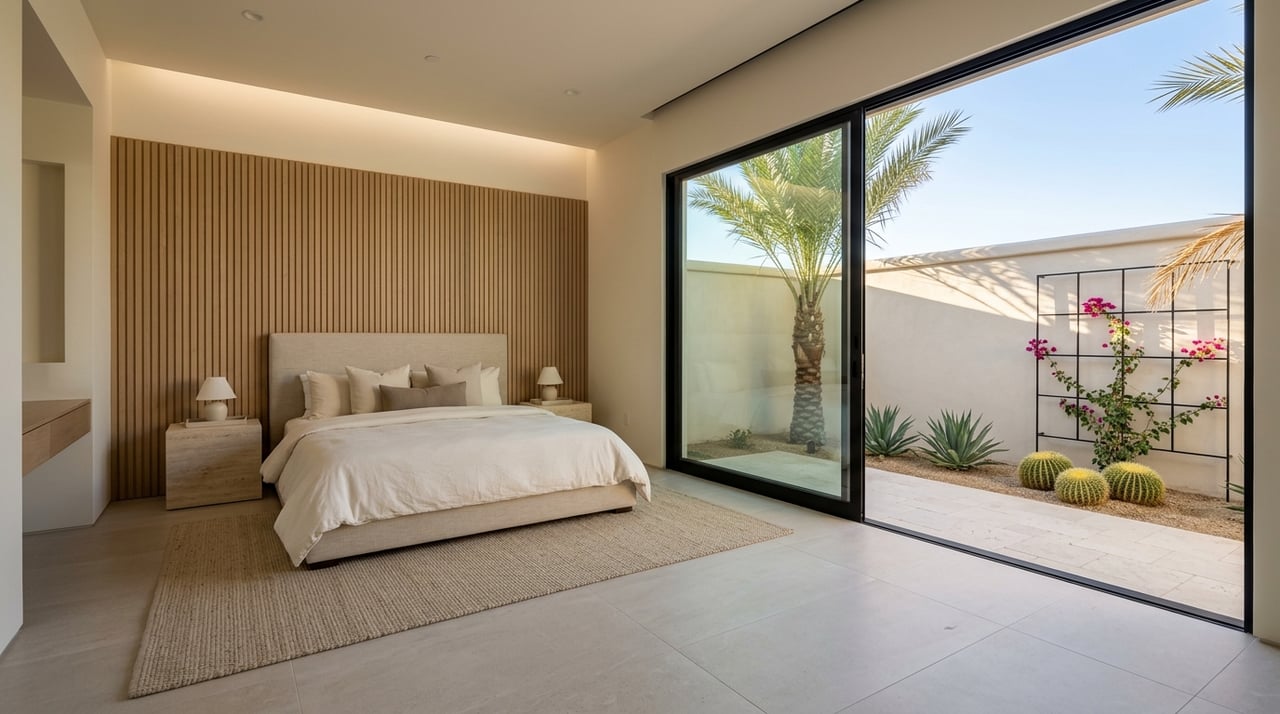
Palm Springs is one of the clearest examples of desert modernism in the United States. In simple terms, that means midcentury modern design adapted to the desert with a focus on sun, heat, mountain views, and indoor-outdoor living.
That local design identity shows up in homes that are low-slung, clean-lined, and practical for the climate. In Palm Springs, the style is not just about appearance. Many of its most recognizable features were created as responses to desert conditions.
When you browse listings, a few visual cues can help you quickly spot a home with authentic midcentury character:
These details often signal more than style. They can also tell you how the home was designed to handle light, shade, airflow, and desert living.
Palm Springs has 52 officially recognized neighborhood organizations. For buyers, one of the most helpful distinctions is whether you are looking at a tract-heavy midcentury enclave or a mixed-era neighborhood where midcentury homes sit beside homes from other periods.
That matters because your buying experience can feel very different depending on the neighborhood. In one area, you may see a strong concentration of similar architectural styles. In another, you may find more variety in lot size, design, and remodeling history.
Twin Palms was the first Alexander residential development in Palm Springs. It is known for one-story midcentury modern homes, cul-de-sac street patterns, and a mix of butterfly, gable, and flat rooflines.
For buyers, Twin Palms offers strong architectural identity and a clear link to Palm Springs modernist history. The city’s historic context also notes that the original landscape design included several varieties of palm trees.
Vista Las Palmas is described by the city as an upscale Alexander-style home neighborhood. You will find one-story midcentury modern homes here with butterfly, low-pitch, and folded-plate rooflines.
This neighborhood is also associated with the well-known Swiss Miss houses. If you are looking for architectural pedigree and a recognizable Palm Springs midcentury setting, Vista Las Palmas is often part of the conversation.
Racquet Club Estates is the largest Alexander development in Palm Springs. It is known for post-and-beam midcentury modern homes, wide lots, street-facing carports, and breezeways.
Because of its scale and concentration of period homes, it remains one of the most important neighborhoods for buyers focused on classic Palm Springs midcentury design.
Sunmor Estates is an original postwar tract associated with Wexler & Harrison. The city describes homes here with features like colored rock roofs, wide overhangs, large expanses of glass, sliding glass doors, and covered patios.
If you want a neighborhood where design details still speak clearly to the era, Sunmor Estates is worth understanding.
Not every desirable Palm Springs neighborhood is a pure midcentury tract. Some areas offer a mix of architectural styles, larger lots, or a different neighborhood feel.
Deepwell Estates is made up mostly of one-story homes on roughly quarter-acre lots, with open yards and a mix of architectural styles. If you like Palm Springs character but want broader design variety, this is a useful neighborhood to compare with more uniform tract areas.
These neighborhoods are more mixed in age and style, but the city still highlights them for architecture, scale, landscaping, and neighborhood character. Movie Colony and Old Las Palmas are associated with larger landscaped lots.
Tahquitz River Estates and Tennis Club are known for low-rise, character-rich settings. Indian Canyons is recognized for its landscape setting and older homes that have often been remodeled to reflect modernistic roots.
A little local vocabulary can help you read listings more confidently and ask better questions.
Desert modernism is the local Palm Springs version of midcentury modern architecture. It is built around heat, light, and indoor-outdoor living.
An Alexander home refers to tract homes developed by the Alexander Construction Company. In Palm Springs, buyers most often connect that name with Twin Palms, Vista Las Palmas, and Racquet Club Estates.
These are names buyers often see in listings that claim architectural significance. Their work appears repeatedly in Palm Springs neighborhoods known for midcentury design.
Swiss Miss refers to a DuBois-designed A-frame subtype found in Vista Las Palmas and nearby tract neighborhoods. It is one of the more recognizable Palm Springs variations within the broader midcentury story.
You may also see terms like:
These are not just labels. In Palm Springs, they can affect what changes may require review and whether tax incentives may apply.
Before you fall in love with a renovation idea, find out whether the home is individually designated, potentially eligible, or located inside a designated historic district. This step is especially important in Palm Springs, where several celebrated midcentury areas are also designated historic districts.
Examples include Twin Palms Estates, Vista Las Palmas, Racquet Club Road Estates, Sunmor Estates/Enchanted Homes, Royal Hawaiian Estates, Desert Holly, Country Club Estates, and Ocotillo Lodge. In practical terms, district status can matter almost as much as the home itself.
Palm Springs requires review of alteration, demolition, and new construction on historic sites and structures in historic districts before permits are issued. That review goes through the city’s Historic Preservation Officer and and/or Historic Site Preservation Board.
The city defines alteration broadly. Visible exterior changes, paving, grading, additions, walls, fences, lighting, trees, and landscape work may all fall under review, while routine maintenance and like-for-like replacement are treated differently.
In some situations, exterior changes may also be reviewed by a neighborhood architectural-review committee or HOA. If you are buying with plans to update the outside of the home, this is a key due diligence item.
A beautiful glass wall and dramatic roofline can be part of the appeal, but desert performance matters just as much as design. Palm Springs midcentury homes often feature large expanses of glass and strong indoor-outdoor connections, so climate-related upgrades deserve close attention.
As you evaluate a property, pay close attention to:
In a hot climate, these items can shape your comfort and your ongoing costs. For many buyers, they are just as important as original design details.
The U.S. Department of Energy notes that cool roofs can deliver the greatest cooling savings in hot climates. It also notes that window performance depends on climate, orientation, and exterior shading, and that sun-control films can reduce heat gain on east-, west-, and south-facing windows.
That does not mean every midcentury home needs the same solution. It does mean you should look at the house as a system, especially if it has extensive glass or older materials.
If you are buying a historic home in Palm Springs, the Mills Act may come up during your search. The city says the program can provide property-tax relief in exchange for restoration and maintenance obligations.
That tradeoff matters. The contract runs with the land and transfers on sale, so if a home already has a Mills Act contract, that responsibility does not disappear when ownership changes.
Palm Springs also notes that HOA properties may require both owner and HOA signatures. Properties with active code-enforcement violations or non-permitted structures are not eligible.
Buying a Palm Springs midcentury modern home is not just about finding the right look. It is about matching architecture, neighborhood, historic status, and upgrade plans to the way you want to live.
A good search starts with clear priorities. Are you drawn to a concentrated midcentury tract like Racquet Club Estates or Twin Palms, or do you prefer a mixed neighborhood with more lot and style variation? Do you want strong original character, or are you open to a home that has been thoughtfully updated?
Once you narrow that down, your due diligence should go beyond finishes and staging. Historic review requirements, exterior change limits, roof and window performance, and possible Mills Act obligations can all shape the true fit of a property.
If you want help comparing Palm Springs neighborhoods, understanding what a listing is really telling you, or narrowing down homes that fit your goals, connect with Deborah Ferrell for thoughtful, local guidance.
Stay up to date on the latest real estate trends.
Whether you're buying, selling, or investing in real estate, Terry and Deborah are here to assist you every step of the way. Contact us today to schedule a consultation and experience the difference our team can make for you!